Money or proving your worth: what you're really earning for
You take a project you don't want, set a price so you won't "sell yourself short", and enjoy the payment for exactly one evening. You may be earning proof, not money. Let's look at where this swap lives in the chart.
The payment has arrived, the amount is good, the project is closed. And the joy lasts one evening. By morning it feels like it's not enough again: one more launch, one more big client, one more number, and then it will finally be clear that you're worth something.
If this sounds familiar, you may not be earning money. You may be earning proof. And proof, unlike money, can't be saved up: you have to win it again every single time.
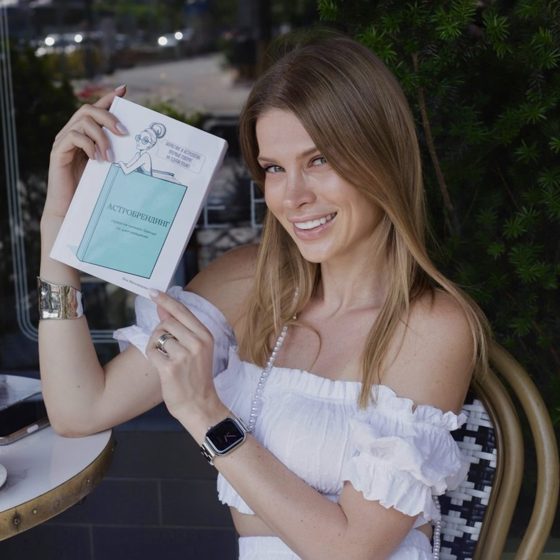
In the birth chart this swap has specific addresses. Let's go through them using my book Astrobranding and Pavel Andreev's Bioastrology 2.0.
Money as exchange and money as proof
From the outside the two stories look the same: you work, you get paid. The difference is inside.
- Money as exchange. You give a clear value and get paid for it. The amount reflects the format and the result. Payment brings calm and resources.
- Money as proof. The amount has to answer the question "am I worth anything?". No payment ever fully answers it, so the bar keeps rising and the pleasure in what you've done disappears.
The second house: a resource that depends on no one
In my method, the "I give, you give" exchange belongs to the second house. Its questions: what do I have? What can I offer? It is the house of self-worth, stability and resources. It shows how worthy you feel and what you are willing to charge money for.
In the book I write that the second house is connected not only with finances but with how you treat yourself. If you don't value your work, others won't value it either.
Andreev adds an important detail. Only "on the fence" is the second house called the house of money. In reality it holds personal resources that depend on no one. Notice those words: on no one. Second-house money is your support, not a grade other people give you. As soon as income turns into a mark from others, it leaves your resources and passes into someone else's hands.
I wrote about the house itself, its sign and planets, in the article on the second house.
The Sun: radiance or a crutch
In astrobranding the Sun is the strategist and the face of the company, the answer to "who do I want to be?". Andreev links it with self-esteem and confidence in your own strength.
He gives a precise description of what happens when the core of the personality is unstable. It's hard for the person to love themselves just as they are, so they hide behind titles, other people's approval, social attributes, money: everything they've tied their self-esteem to. A strong Sun, Andreev writes, loves life just as it is. It doesn't need to prove its importance by putting on a show.
There's good news too. For some people money really is the Sun's path. In the book, the Sun in the 2nd house sounds like this: "I want to fulfil myself through value, stability and personal income." If that's you, wanting to earn well isn't a swap, it's your real radiance. The only question is what you want it for: for support, or for other people's recognition.
Aspects where "prove it" is heard
Sometimes the urge to prove is built into how the members of your brand team get along with each other. The book has several tense aspects where the word is said outright.
- Mars and the Sun, tense aspects: "I try to prove my importance, even through a fight." Action is triggered not by desire but by the need to win.
- Venus and the Sun, tense aspects: "I was recognised through my tastes. I often choose in order to prove my worth." Product, price and even clients are chosen for someone else's approval.
- The Sun and Saturn, tense aspects: suppressing, blocking yourself, being afraid to make a mistake. Here the proof is quiet: you prepare for years so that no one could possibly have any questions.
This isn't a verdict. It's knowledge of where you risk starting to work for a grade instead of a result. I'll go through how planets interact with each other in the article on aspects.
Saturn says "prove it", and that's fine
In the book Jupiter and Saturn are described as a coordinate system. Jupiter calls you to grow: "You can do more." Saturn sets the frame: "But first, prove it."
That is a healthy "prove it". Saturn is your 10,000 hours, the path of growing up and real expertise. It doesn't sell, but it is what makes sales sustainable. Saturn's proof accumulates: experience, craft and trust stay with you and give you the right to speak with weight.
Lilith says a very different "prove it". And it matters to tell them apart.
Lilith: "I'm worth nothing without material confirmation"
In my method Lilith stands for false thoughts: a thought that sounds like yours but is actually a trap. In the second house she speaks about exactly this swap: "I'm worth nothing without material confirmation."
There are neighbouring phrasings that lead to the same place:
- Lilith in the 5th house: "My creativity means nothing if it isn't recognised."
- Lilith in the 10th house: "If there are no achievements, there is no me."
- Lilith in Capricorn: "If I'm not at the top, I'm a failure." False thoughts: being strict with yourself, comparing, living in an endless "I must".
Lilith can't be removed, but she can be recognised. Once you hear her voice as separate from yours, it stops running your prices and decisions. More in the article on Lilith.
Chiron: when payment touches a nerve
The book describes Chiron in the second house like this: it hurts me when I'm not paid, when my talents aren't valued, when my worth is called into question. Here any haggling, refusal or request for a discount feels not like a business conversation but like a blow.
Chiron isn't a false thought, it's real experience. And once it's been lived through, this is the very topic where people hear you best: you can help others build their relationship with money and value, because you've walked that path yourself. More in the article on Chiron.
How to tell you're earning proof
A few signs worth honestly checking against yourself:
- the joy of being paid fades quickly, and the "it's not enough" anxiety comes back;
- you take projects you don't want because they "look solid";
- your price depends not on the format and the result but on how you'll look to colleagues;
- you experience a client's refusal as a verdict on you, not on your offer;
- you find it hard to rest: a pause feels like disappearing.
What to look at in your chart
- The second house. The sign on the cusp and the planets inside: what resources you have and what you can charge for without an inner argument.
- The Sun's house. Where you want to shine. If it's the 2nd house, income is your legitimate path. If it's another one, check whether you've swapped your radiance for a number.
- The Sun's aspects with Mars, Venus and Saturn. Are there tense ones where "prove it" is heard?
- Saturn's house. Where your healthy "prove it" lies: what experience you need to build to speak with weight.
- Lilith and Chiron. Are they in the 2nd, 5th or 10th house, and whose voice are you taking for your own?
Houses depend on the exact time of birth. If you only know it roughly, Lilith may "move" from the second house to the third, and the Sun from the tenth to the eleventh, and you'll be looking for the swap in the wrong place. A rectification helps pin down the time.
Money you don't have to prove
Money isn't the enemy, and it isn't the measure of your worth. In the second house it's a resource that belongs to you and depends on no one. When you can tell Saturn's healthy "prove it" from Lilith's false one, work stops being an exam. Your price starts to reflect the format and the result rather than your fear, and every payment becomes what it should be: an exchange that leaves you with strength for the next step.
Find out what makes your brand strong
Enter your date, time and place of birth. In a minute you'll see the core of your brand, where your energy comes from and how others perceive you.
- What people will pay you more for
- What to sell and in which format
- Where your people are and how to talk to them
- A visual style that matches your image
- A 30-day plan of first steps
The free reading comes first. You buy the full strategy only if you want it.