I keep changing careers: searching for myself or running away? What the birth chart says
You've started over several times already: with shining eyes, courses and plans. And six months later it got boring, and you went looking for "your thing" again. Let's look at when a career change moves you forward and when it takes you back to square one, and what in the chart stays the same whatever work you do.
First it was design. Then psychology, then marketing, then you were seriously thinking about a pastry shop. Each time you lit up, bought courses, told the people close to you about your new plans. And each time, a few months later, the familiar feeling came back: this isn't it. Your family already asks "again?", and you yourself start to doubt that you have a calling at all.
A personal brand has a special problem here. It can't be built, because every time you start from zero: a new topic, a new audience, a new image. It seems the problem is that you still haven't found "the one" profession.
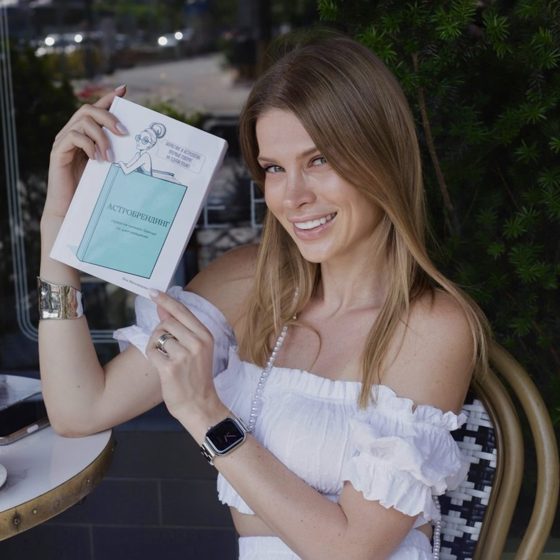
But in the birth chart the question is framed differently. Not "which profession is mine", but "why do I leave, and what stays with me in any job". Let's go through it using my book Astrobranding and Pavel Andreev's Bioastrology 2.0.
Two kinds of change
A change of direction in itself says nothing bad. The book describes a moment when it's exactly what's needed. I write that houses 8 and 9 in products are not an entry point but the next step. You get there when there's already a path behind you: the famous 10,000 hours of Saturn are done, a foundation of value and respect is built, the craft is honed and trust is earned. And then the brand starts wanting to try something new, because the old way has become too tight.
That's the first kind of change: growth. You leave because you've outgrown it.
The second kind looks the same from the outside but works the other way round. You leave not when it got tight, but when it got hard. When the joy of novelty ran out and ordinary work began: repetition, mistakes, first failures. That's not growth any more, it's escape, and it takes you back to the start.
A simple question helps tell them apart: what did you manage to take with you from the last place? If you left with a craft, people's trust and an understanding of your value, you're growing. If all that's left are courses and abandoned accounts, you probably left before real experience began.
The Sun: when there's nothing inside to compare with
In my method the core of a brand rests on the Sun and the Moon. The Sun answers the question "who do I want to be?" and sets the vector: the theme, leadership, the direction of attention. The Sun forms desire, it gives the thought its impulse: "I want".
Andreev has a line that explains the endless search very well. You will never like your profession, your country or your partner if the Sun in your birth chart is silent: you literally have nothing to compare reality with when it's empty inside.
So the issue may not be the professions at all. If you don't know who you want to be, any job will feel "wrong", because there's no inner yardstick to hold it against. The search outside is endless until an answer appears inside. Andreev also describes the other side: when a person is in touch with themselves, they stand firmly on their feet, know their place in their profession, and questions like "what do I do with myself" are unfamiliar to them.
So the first step isn't choosing the next profession, but reading the house and sign of your Sun. That's your yardstick.
Mars: interest fades, and it's not weak willpower
The Sun lights up the direction, but it doesn't move the body. Movement is Mars: the force that turns "I want" into "I do".
The book has a line worth reading for anyone who keeps dropping what they start: if you constantly put things off, slide back, lose interest, the problem isn't willpower. Most likely you're simply ignoring your Mars rhythm. Mars shows how you enter action: with a big sweep or carefully, fast or after thinking it through.
And one more important thing: Mars isn't a hero on its own. It doesn't decide where to go, it serves your core. In the book I call it a courier who will deliver your idea, if you tell it the route and refuel it in time. When there's no route, the courier drives off in the first direction it finds, and a couple of months later in another. More in the article about Mars.
Signs that love to switch
A sign shows the style in which a planet works. And some signs have movement right in their description.
- Gemini: the planet acts flexibly, lightly, by switching. In the book this is the energy of "trying", "moving on", "passing on", rather than settling.
- Sagittarius: the planet strives to expand, to look for horizons and ideas, its actions are aimed at the future.
- Aquarius: the planet goes beyond the familiar, it's the energy of experiment and rejecting templates.
If your Sun, Mars or other personal planets are in these signs, switching is your natural style, not a defect. Then the question isn't how to stop changing, but how to make variety part of your brand instead of a reason to start over every time.
Jupiter and Mars: the search for the perfect profession
Andreev describes the tense aspect of Jupiter and Mars, where scale and dream wage war on the ability to simply work and do what you love. Among its expressions he directly names the search for the perfect profession, niche or calling and an aversion to routine, especially when Earth is weak in the chart. And one more recognisable belief: the faster you reach a goal, the faster you need to set a new one, just so you're never left without goals.
In Astrobranding the same combination has a short formula for tense aspects: "I try to jump higher than I can, I act on inflated pathos". Each new profession seems to be that big idea, and ordinary work inside it seems too small.
If you recognised yourself, it's not a verdict. It's a hint: your engine runs on an idea, and it needs an idea that won't run out in six months. And routine is worth building so that it serves this idea instead of arguing with it.
Saturn: the 10,000 hours that never happened
If Jupiter shows where you want to get to, Saturn shows how. In the book it's the path of growing up and real expertise: those 10,000 hours of experience that let you speak about yourself with confidence and create your own thing. Repetition, discipline, respect for form. It's not the path of inspiration, it's the path of maturity.
An important detail: Saturn doesn't point to a niche of expertise. It shows in which area to apply that expertise, where you'll grow up and gather your inner foundation piece by piece. The book has an example: if you want to be a teacher (Sun in the 9th house), you have to study for years (Saturn in the 3rd house).
Andreev has an image that fits the topic of changing careers very well. If the Moon is your home cabin where you relax, Saturn is your professional cabin, where you work calmly and steadily and feel you're in your place. He links the feeling that your professional path is the right one to Saturn.
When professions change too often, Saturn simply isn't allowed to switch on. It doesn't like quick results, it accumulates. And that very feeling of "I'm in my place" doesn't come at the start of the path, but after you've gone through the boring part. More about work as everyday usefulness in the article about the sixth house.
The lunar nodes: where it's easy to slide back
In the book the nodes describe your personal trajectory: from the familiar to the developing.
- The South Node is your base. Here you're strong and act automatically. Here it's easy, and that's exactly why it's so easy to slide back there.
- The North Node creates resistance. It doesn't look like you, it feels "not yours", but it's what opens growth and scale.
Look at your career changes through this pair. Perhaps each time work began to demand the qualities of your North Node, you left for a place where it was easy again. A new profession can look new and in fact return you to the same zone of habitual reactions.
What stays in any profession
In the book I write that positioning is a base you build for yourself so you can see the direction of movement. So you don't try to be everything to everyone. So you don't scatter yourself.
And here's good news for those who've changed many paths: in my method a personal brand isn't built on the name of a profession, but on the structure of your personality. Your Sun, Moon, first house and Mars don't change when you move from design to psychology. Only the area in which they work changes.
That's why different experience can be gathered into one story. To do that, it's worth finding what repeated across all your professions:
- what theme you brought into every job (that's your Sun);
- in what rhythm you liked to work and what drained you (that's the Moon and Mars);
- what you were praised for and what people came to you with in any team;
- at what moment you usually left: when it got tight or when it got hard.
This is what your products are made of. In the book the basis of products is houses 2, 5 and 6: "my skills", "my ideas", "my work". Skills gathered in different professions fit the second house perfectly once you stop treating them as random. More about how the houses of realisation work in the article about the five product houses.
Signs that you're running away, not growing
- you leave at the stage when the novelty is over and there are no results yet;
- about every new profession you think "this time it's really mine";
- your past experience feels like wasted time, and you don't mention it;
- you study a lot and sell little of what you've learned;
- you can't put into words what all your occupations have in common.
What to look at in your chart
- House and sign of the Sun. The yardstick you compare any profession with.
- Mars. Sign, house and aspects: your rhythm and style of entering action.
- Signs of the personal planets. Are Gemini, Sagittarius, Aquarius in your chart, and where.
- The aspect between Jupiter and Mars. Is there tension between the dream and ordinary work.
- House of Saturn. Where you need to gather your 10,000 hours.
- Lunar nodes. Where you slide back out of habit and through what you grow.
The houses of Saturn, Mars and the nodes depend on the exact time of birth. If your time was recorded roughly, you may be looking for your area of experience in the wrong house. Birth time rectification helps pin the time down.
Not a new profession, but your own yardstick
The endless search for "your thing" often comes not from having too many options, but from having no yardstick inside. When you know who you want to be, in what rhythm you like to work and where to gather experience, change stops being escape. You can change formats, fields and products, and your brand will still sound in one voice: yours.
Find out what makes your brand strong
Enter your date, time and place of birth. In a minute you'll see the core of your brand, where your energy comes from and how others perceive you.
- What people will pay you more for
- What to sell and in which format
- Where your people are and how to talk to them
- A visual style that matches your image
- A 30-day plan of first steps
The free reading comes first. You buy the full strategy only if you want it.